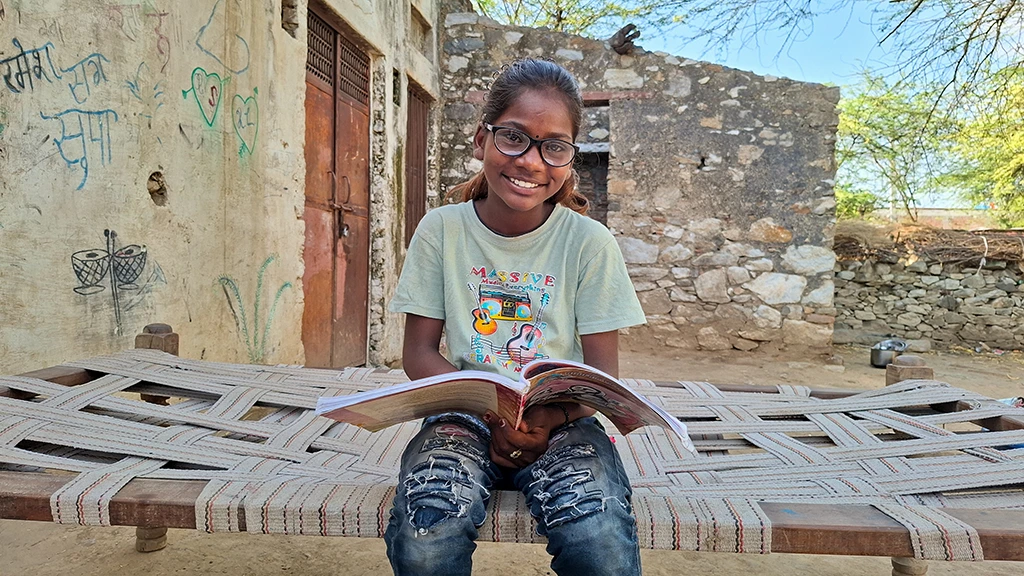
Twelve-year-old Premi, in Rajasthan, India, loves reading and going to school, but in recent years, her enthusiasm for learning came under threat when her eyesight started to fade, making it difficult for her to read the blackboard and keep up with her studies.
Premi is one of three children. Her parents and older brother work as day labourers on nearby farms to support the family. Despite their efforts, money is often tight, and a visit to the optometrist would be a stretch for them. Fortunately for Premi, her school was visited by one of our eye screening teams as part of our Vision-centre Based Community Eye Health Project with our partner in the area, the Alakh Mayan Mandir Eye Hospital. Premi was quickly diagnosed with refractive error and received a pair of prescription eyeglasses, free of charge.
The whole family is grateful that this bright young girl can continue her studies, with hope for a brighter future.
Our approach to eye health ensures entire communities – including schoolkids like Premi – get screened for eye conditions and can access treatment at low or no cost. By offering multiple screening opportunities at schools, vision centres, screening camps and right on people’s doorsteps, we make sure nobody falls between the cracks.
Our unique “recipe” for community eye health
Our approach starts at the planning level – working with government and community partners to select a location with a high prevalence of vision loss and low socio-economic status – and a partner hospital with a compatible mission and vision.
Next, we collaborate with partners on an action plan, define the project area and decide on locations for vision centres. Once established, the vision centres act as links between communities and hospitals, providing comprehensive eye exams, dispensing glasses and making referrals to our partner hospital for surgeries.
Then, the training of community health workers begins. These frontline workers, mostly women, learn how to conduct visual acuity tests, identify various eye conditions, make referrals and provide eye health education. For many of our beneficiaries, the relationship with our programs begins and ends with the community health worker – who might visit the same household many times, offering kindness, compassion and counselling to nervous patients, as well as their eye health expertise.
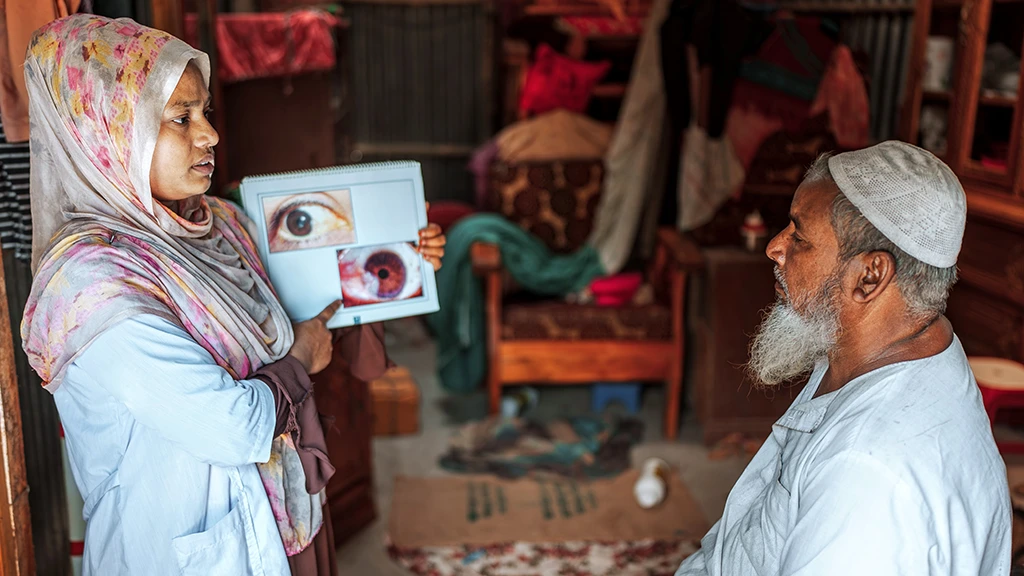
After their training, the community health workers fan out to our various communities of work, doing a baseline door-to-door survey and referring patients to the vision centres and partner hospitals for further diagnosis and treatment.
As we continue our work in the area, our teams organize various screening camps and school screenings to give everyone multiple opportunities to have their eyes checked. Community health workers also continue their door-to-door work, checking in on patients, providing eye health education and troubleshooting any problems patients might face in getting treatment. Teams crunch numbers to monitor progress and evaluate each project, later bringing in external agencies to audit the work.
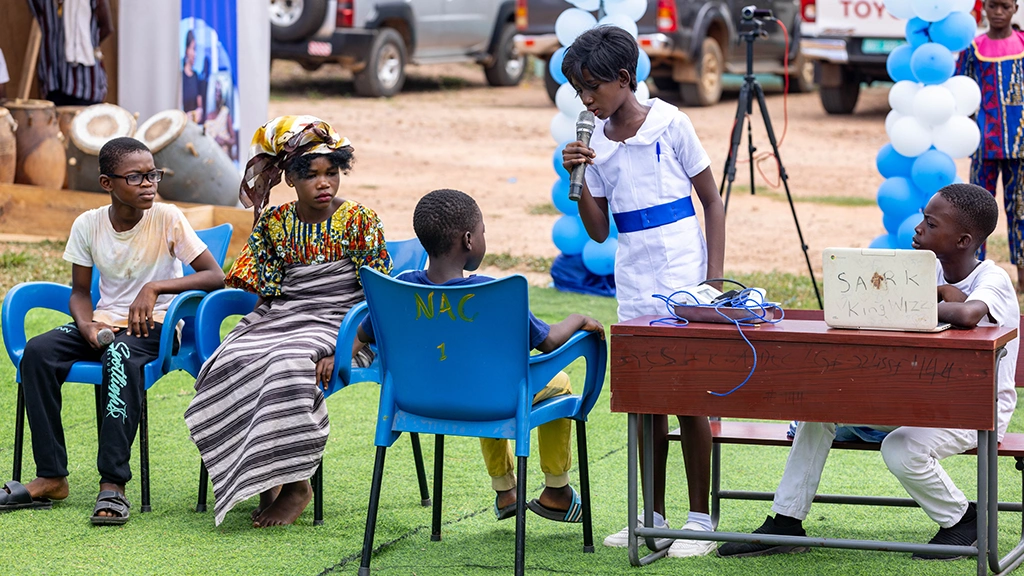
When the community health volunteers have done their final survey to make sure there are no backlog cases, villages and communities are declared as Avoidable Blindness-Free through public celebrations. At this point, the vision centres have become self-sustaining, so they can continue to deliver quality eye care services beyond the project’s duration.
Providing more than just eye care
The community health workers we employ for our door-to-door surveys can offer much more than just eye health expertise. Many have received additional training in primary health care and can provide advice and referrals for things like immunizations, vitamins, and maternal and newborn health care.
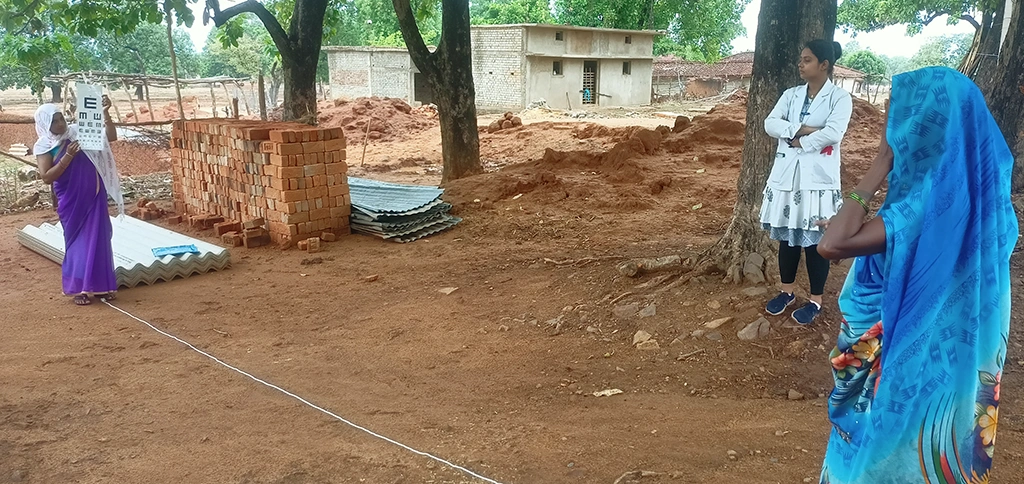
Shakuntala, an Accredited Social Health Activist (ASHA) with the Government of India, spent eight years providing advice to expectant mothers, and offering newborn care support, before she received additional training in primary eye care. With her experience, she can continue to offer referrals and education to mothers while she does her eye health screenings.
In 2024 alone, our community health workers linked more than 50,000 children aged five and under with crucial vitamin A injections, which reduces the severity of childhood illness and increases survival rates, while also helping them develop healthy vision. Also in 2024, we referred more than 16,000 expectant mothers and 12,000 nursing mothers with health facilities for check-ups.
Moreover, a community health workers frequent visits to a household can help them monitor a patient’s progress not only with an eye condition but with other health problems as well.
Take Bulal in Nepal, for example, a 97-year-old man who has cataracts as well as diabetes. When Meena, an Operation Eyesight-trained community health worker, met Bulal during a door-to-door survey in 2021, she realized that he would need additional support to get the treatment he needed for his low vision. While he had been previously diagnosed with cataracts, the doctor told Bulal that his unstable blood sugar levels – and his high blood pressure – made cataract surgery too risky. Bulal thought he would live out his final days in darkness.
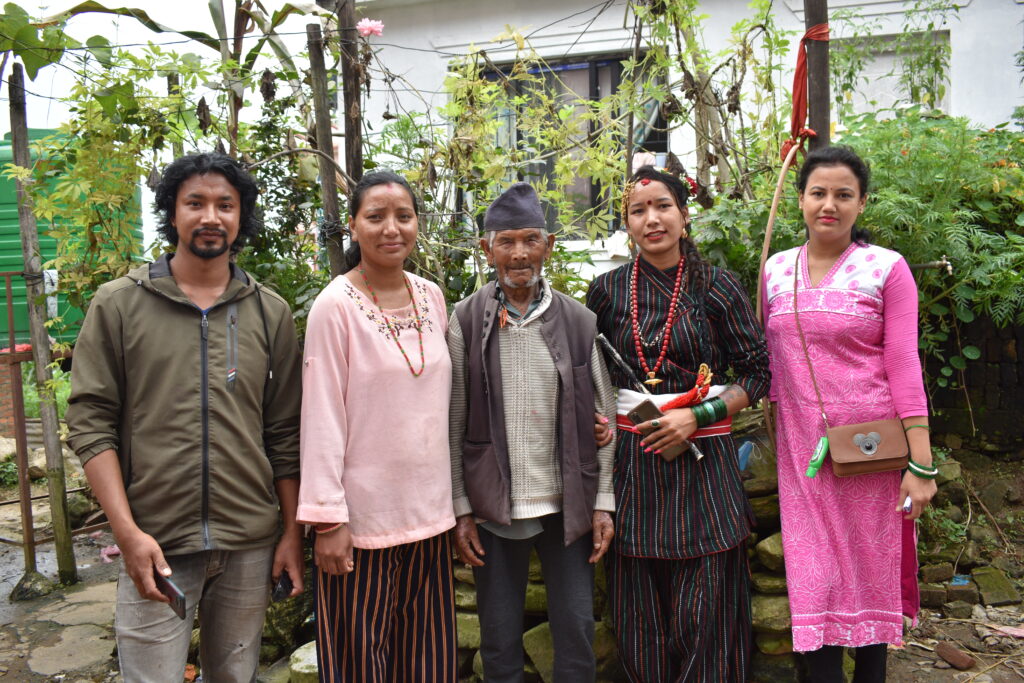
But when Meena heard his story, she set a plan in motion. Over the next few months, with Meena’s support and guidance, Bulal stabilized his sugar levels and brought down his blood pressure so he could safely undergo surgery. His family was grateful to see Bulal restored to his former dignity and independence once he could see clearly again.
From patient to ambassador – spreading the word about eye health
Ntiiti, a mother of five from a remote village in Kenya’s Kajiado County, started losing her vision in 2020. She didn’t know why she couldn’t see clearly and wondered if she was the victim of a curse. Soon, her vision was so poor that she could no longer perform essential day-to-day tasks like making meals, taking care of her children and looking after the family’s cattle.
Help arrived unexpectedly when a community health promoter, whom we’d trained in primary eye care, visited her home while conducting door-to-door screenings. He identified cataracts and sent her to a nearby eye screening camp for a formal diagnosis. At the camp, an ophthalmologist confirmed Ntiiti had bilateral cataracts and referred her for surgery. Ntiiti had never been to a hospital or clinic before, because of the distance to these facilities from her village, but our team helped arrange transportation so that she could get the treatment she needed. Thanks to our generous donors, she received surgeries on both eyes, free of charge.
Amazed by the difference the surgeries made to her life, Ntiiti told everyone in her community who complained of vision or eye problems about her miraculous recovery. Soon, she had her first recruit – a widowed mother of six who was living in total blindness. Ntiiti connected her to the community health promoter and even accompanied her to the hospital for her surgery.
We have many similar stories of patients like Ntiiti who become ambassadors for our programs. It speaks to the strength of our approach – by taking the time to build relationships in the community, patients with success stories become empowered to spread the word about the importance of getting treated for blindness and vision loss.

To create the biggest impact, we start at the community level. By training and empowering local health workers, we can help create lasting connections that bring eye care directly to people’s doorsteps. These trusted workers are the heart of our model – identifying problems early, guiding patients through treatment and spreading awareness that can transform entire villages.
With your support, we can train more health workers, open more vision centres and ensure that no one is left behind. Donate today to help us build a future where avoidable vision loss is eliminated for good.