


Alice Mwangi is our country manager in Kenya, and she’s worked with Operation Eyesight for the last eight years.
We’re always excited for the chance to talk to our international team members because they have incredible experiences to share from their time in the field – and Alice had quite the story to tell!
Alice has seen how the work we do transforms the communities we help in Kenya. She told us that one reason Operation Eyesight is well-respected in the eye health sector by our partners and the governments we work with is because of our integrity.
“Our partners value us because they know that Operation Eyesight follows through,” she says. “Our partners trust us to do what we say we’re going to do, and that’s how we work together effectively.”
We wanted to know what Alice enjoyed most about her work on the ground, and this is what she told us:
“What I enjoy is being allowed to think creatively within the Hospital-Based Community Eye Health Program’s framework. We’re encouraged to adapt the model to suit the community being served, based on their culture and infrastructure.
“Households appreciate being visited by community health workers. They can’t believe that nurses are coming to their doorstep to check on them and refer them for treatment.”
Alice’s passion for her work comes from her own experiences, seeing our work in person. She has witnessed how people’s lives completely changed after receiving sight-restoring treatment.
“One thing that really inspires me is seeing how many people’s lives are restored when sight is restored. Our team meets people who feel like they’ve been condemned to die because they’ve gone blind – they can’t work, they can’t participate in their communities and they feel hopeless. In so many cases they’re extremely isolated, and they don’t know where to go to seek help.
“So, when a community health worker comes to their door and tells them they can get their sight back, their faces light up with joy and hope. When they receive sight-restoring treatment, they’re reborn, and they have hope again. They can go back to working and participating in their community. It’s incredible to be a part of that.”
Alice told us that because so many of the communities we serve are so far away from the resources they need, patients need transport to and from our partner hospital or nearest vision centre. Sometimes the partner hospital will provide transport, but our staff have field vehicles specifically for the transportation of staff and patients.
In some cases, a village is too remote, and doesn’t have the necessary infrastructure to build a local vision centre. In those cases, it’s easier to set up an eye camp in a village and bring the ophthalmic staff to them. Community health workers go door-to-door, telling people about the eye camp and referring people who need a diagnosis.
It’s difficult to reach communities that are so far away and hard to access, but Alice is fueled by her passion and dedication to reach absolutely everyone with the quality eye care they need.

“One story that has stayed with me is about an older man who had gone completely blind. He lived in West Pokot, in a hilly region that’s incredibly remote. He had heard about Operation Eyesight, and his daughter walked with him to Lomut Health Center to seek treatment. The health center is a satellite facility for the Kapenguria Eye Unit. He told me he had walked 12 hours! I could hardly believe it. He had heard about Operation Eyesight and the work we do, and his desire to see again was enough to carry him through the long hours of walking to seek treatment.
“When he reached the health centre, he learned that he had been suffering from cataracts. Soon after, he received sight-restoring cataract surgery, and he was so excited! He couldn’t believe he had his sight back.
"His treatment was completely paid for thanks to the support of our donors, and an Operation Eyesight shuttle bus was arranged to take him and his daughter home. The shuttle drove as far as possible before paying a local motorbike taxi to take them the rest of the way. In remote communities like his, there are no roads for traveling easily by car, and the most effective mode of transport is by motorbike. That's how far away this man lived! Unfortunately, his circumstances aren't unique. Many of the communities we serve are similarly remote and difficult to access. Even so, our team works hard to reach these communities to bring them quality eye care.
“I just remember how this man's face lit up when the bandages were removed after his surgery! His smile stretched across his face, and he could SEE again. His many hours of walking were not in vain. With his sight restored, his independence and his hope were as well. It’s always inspiring to meet people like this man and see how their lives are transformed after eye surgery.”
We’re so proud to have Alice in the Operation Eyesight family!
And it’s people like YOU who make her work possible. Together we’re transforming entire communities through the gift of sight – For All The World To See!

Jabow’s typical day starts with completing all her household chores early in the morning. In the afternoon, she goes door-to-door in her community to screen each household for eye health issues and educates the community about the importance of eye health-seeking behaviour.
In her early days, she ran a child care centre in her community, using the money she’d make from sewing and selling clothes in the village to support the centre and the nearly 200 children enrolled.
During her first meeting with a member from our team, she was very happy to hear that people in her community would have access to quality eye care, including her mother who was struggling with her own eye health.
It wasn’t until Jabow conducted her first door-to-door screening that she understood how widespread eye health issues really were in her community. Now she identifies patients who require eye care and refers them for treatment.
One of Jabow’s major accomplishments was her contribution to the construction of a road leading into the village. A mobile eye unit was scheduled to come to the village, but residents were concerned that the unit wouldn’t reach them because of the road’s poor condition. But Jabow didn’t lose any hope. She rallied the young men in the village and requested government support for the road construction. A month later, the road was completed, and the mobile eye unit reached the village!

Jabow is respected and trusted by those in her community. Her work has made it possible for many children, women and men to receive sight-restoring eye treatments that have transformed their lives. Her community has given her the nickname “didi”, which means elder sister who cares for everyone’s health.
Because of you, Jabow will continue serving her community, and she is looking forward to declaring her village as avoidable blindness-free.
Thank you so much for being a part of Jabow’s story, and for being a part of her community’s story. You’ve already helped so many people, and together we can help so many more!
Let’s eliminate avoidable blindness – For All The World To See!
Anyone can make an incredible impact with the gift of sight. Victoria has (above), and you can too.
“I’m Victoria and I’m a 17-year-old Chinese Canadian currently living in Toronto. In the fall I hope to study illustration. Meantime, I have a part-time job as an art instructor. As soon as I started working, I made the decision to donate a third of my paycheque to a charity of my choice.
I found a website listing the most accountable international charities, and Operation Eyesight was on that list.
I think eyesight is the most important thing to me as an artist. To think there are people living in poverty who suffer with avoidable sight loss makes me realize how important my sight is. Because of this, I want to give others the same privilege. Donating to cure blindness can last someone their whole life.
I wanted to get a job so that I could decide where to donate my money. Donating $100 was a lot to me, but it felt like the right thing to do. I asked myself, what was I going to do with $100 anyway? By donating to Operation Eyesight, I can give people sight-saving eye surgeries, so they can see for the rest of their lives.
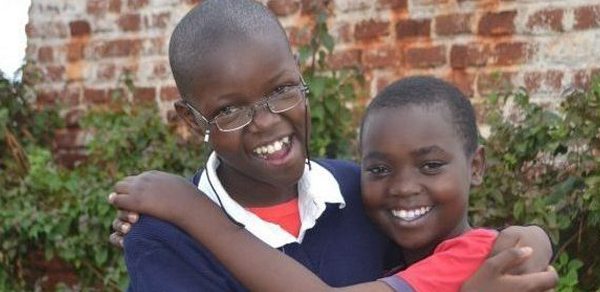
After donating, I felt like I was part of something bigger and beyond myself. I didn’t feel entitled to the money, and letting it go to a cause felt good.
I encourage others to donate to charities and organizations as well, because donating is such a good feeling. Especially if it’s for a cause you stand behind.”
Thanks for sharing your story with us, Victoria! We’re so grateful for your support.
Tell us your story! How and why do you support Operation Eyesight? Call us toll-free at 1-800-585-8265 or email us at info@operationeyesight.com. We’d love to hear from you!
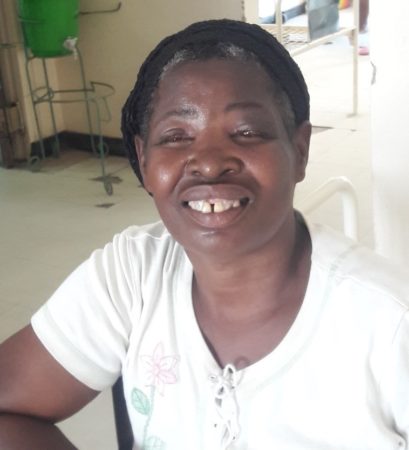
38-year-old Evelyn lives in Muziyo village, about 35 kilometers south of Zambia’s Sinazongwe District. What started as itching and irritation of the eyelids turned into severe, burning pain. Before long, Evelyn couldn’t even blink without feeling intense pain, and she started to lose some of her vision.
“It was very painful for me to open my eyes, and bright sunlight only made it worse,” she explains sadly. She didn’t know what was causing her so much pain, and she feared she would lose her sight completely.
It was a very difficult time in Evelyn’s life. She couldn’t walk without someone to guide her, and she could barely open her eyes. Sadly, Evelyn’s condition continued on like that for five long months.
Lucky for Evelyn, an outreach screening camp organized by Operation Eyesight was held in her village.
Evelyn attended the camp, where she was screened and diagnosed with trachoma, a bacterial eye infection that causes permanent blindness if left untreated.
Evelyn was referred for trachoma surgery at the Maamba General Hospital. Finally, her suffering came to an end.
Today, Evelyn can open her eyes without experiencing any pain, and her remaining vision has been preserved.

Trachoma affects women and children most, as children will touch their faces with dirty hands, and mothers will develop the infection through contact with their kids. Unfortunately, women don’t usually access eye care services with the same frequency as men. In many cultures, women’s health isn’t seen as a priority, and other barriers, such as low income or distance to a health centre, prevent women from seeking help. But thanks to you, Evelyn and the other women of Muziyo received the care they needed!
“I’m really so grateful for all the help I received,” Evelyn says smiling. She’s happy that her treatment was provided free of cost, all thanks to our generous donors!
There are still millions of women like Evelyn who need your help. Make a donation today and give the gift of sight!
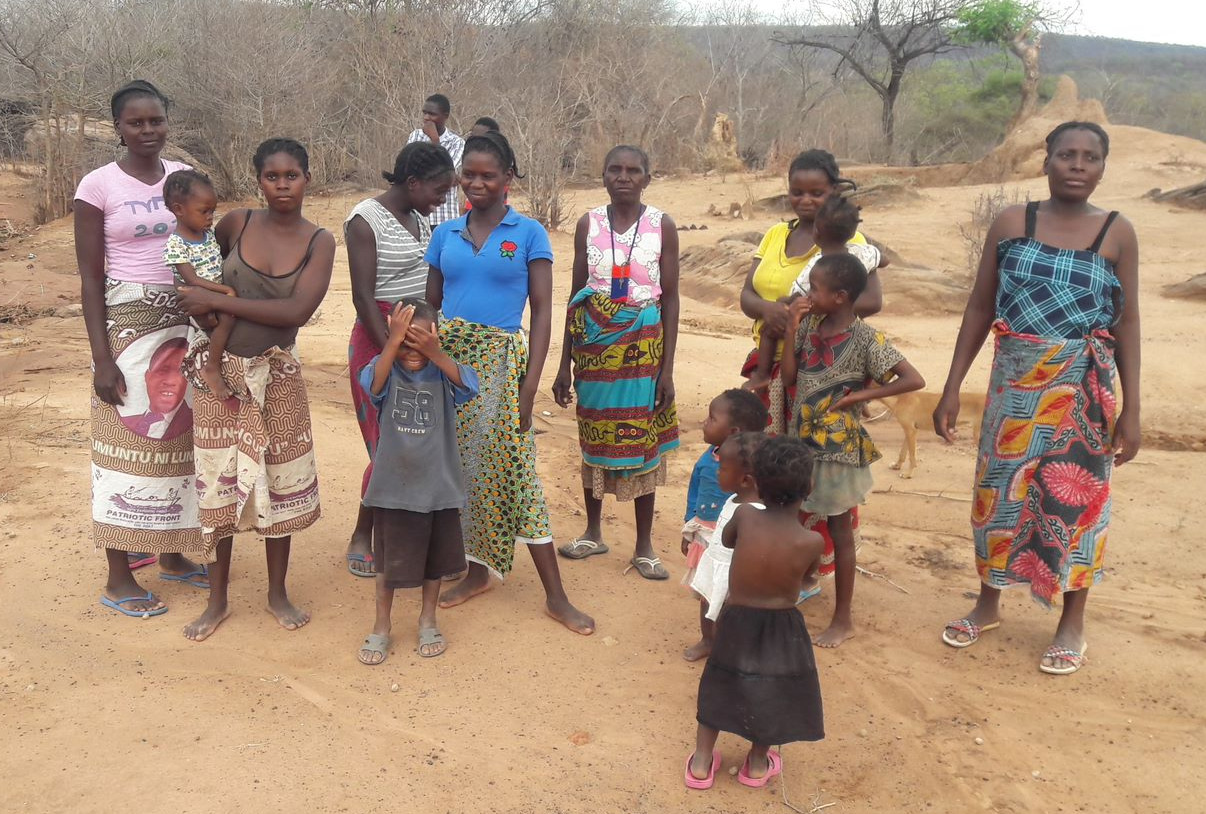
Back in 2011, Operation Eyesight drilled a borehole in Muuka village, located in Zambia’s Sinazongwe District. Because of generous donors like you, 238 people finally had access to clean water. As a result, the population increased to nearly 350, as more people settled in the village and new families were started.
Unfortunately, the borehole become dysfunctional in 2016, and the community didn’t have the capacity to fix it. To make matters worse, the dry season in the Sinazongwe District is very dry, with little to no rain. All the deciduous trees shed all their leaves in August, and there is no green vegetation visible for miles. Years of inadequate rainfall in the district have caused all the hand-dug water holes and seasonal streams to dry up in Muuka village. Because of this, the villagers faced immense challenges in sourcing the water they needed while the borehole wasn’t working.
The water source they did manage to find wasn’t protected, so they had to share it with animals. This meant they were susceptible to disease. It also meant they didn’t have clean, safe water to wash their faces and hands with, which put them at risk of contracting trachoma. Trachoma is a bacterial eye infection which spreads easily through contact with eye discharge from infected people on hands and clothing, and also through direct transmission by flies. Left untreated, trachoma leads to irreversible blindness.
Fortunately, Operation Eyesight’s donors stepped in to help, by donating to our borehole rehabilitation training program. The people of Muuka village were delighted to see a team of local, Operation Eyesight-trained pump minders arrive to rehabilitate their borehole.
Excited, the people of Muuka village gathered around the dry and dusty borehole to watch the pump minders do their work. When it was done, everyone was filled with joy! The women looked on smiling as their children hurried for their turn to drink the flowing water.

Thanks to kind-hearted people like you, the people of Muuka village have a reliable source of clean water again. Now families have safe water for cleaning and cooking, and they can help stop the spread of trachoma and other disease. Our donors should be so proud of the incredible difference they’re making in the lives of thousands.
You can help other villages like Muuka by donating to our Greatest Needs program, so that families will receive the help they need when they need it – For All The World To See!
We celebrated World Sight Day on October 11, but for our hospital partners, one day wasn’t enough! They needed a whole week to celebrate their achievements. They were also celebrating you, because without your generous support, none of this would have been possible! Across India and Nepal, 15 partner hospitals marked their achievements in the elimination of avoidable blindness and raised awareness about eye health. Their biggest accomplishment? The declaration of a spectacular 281 avoidable blindness-free villages by eight hospitals. Wow!
Lives lost. Hospitals and homes flooded. Eyeglasses washed away in the deluge. An outbreak of waterborne infections. The situation in Kerala state, India is devastating, and the impact on people’s health – including their eye health – is alarming. Our team in India has jumped into action, organizing medical relief camps in collaboration with Little Flower Hospital, our longstanding partner in Kerala.
We’ve been working in Kerala since 1973, as part of our long-term development strategy to eliminate avoidable blindness in India.” While we’re not a disaster relief organization, Little Flower Hospital came to us, explaining the severity of the situation and asking us for help. We already have the processes and resources in place to provide immediate eye care to those in need, and we’re eager to help.
Hit by monsoon rains and torrential downpours, Kerala received over 222 cm of rainfall (40 per cent more than average) between June and August this year. Roads have been washed out and 80 per cent of the state was without electricity for almost a week. Homes were destroyed, leaving millions of people displaced and without any of their possessions, including their eyeglasses.
With the spread of waterborne bacteria, there is already a reported rise in eye infections – but people are unable to access eye care services for medicine or treatment. To make matters worse, there is a shortage of ophthalmic personnel and people are also unable to access their money to pay for services.
“We’re grateful to our donors who have given generously to our Greatest Needs Fund in the past, trusting us to put their donations to good use where it’s most needed in our work,” says Aly Bandali, our President & CEO. “This gives us the flexibility to be able to respond to situations like this.”
Little Flower Hospital has started conducting medical camps in relief camp sites, however, their resources are extremely limited, and thousands of people in need of medical assistance are being left out. Our team in India already has a plan in place to reach those who are unable to access, or afford, eye care services right now.
“We’ve started mapping out the areas where the need is greatest and will soon be mobilizing community outreach teams,” says Dr. Santosh Moses, our Regional Manager in South Asia. “At the health camps, we’ll screen people for eye problems and provide free eye care treatment for those in need. We’ll provide antibiotics to treat infection, new prescription eyeglasses, surgical treatment and other eye services as needed.”
Our organization has been working with Little Flower Hospital since 1975. As an international development organization, we’ve supported the establishment of the hospital’s eye department, enabling Little Flower Hospital to perform the first corneal transplantations in India. In addition, we’ve worked with eight other local eye hospitals in the past, at one point covering 10 out of the 14 districts in the state.
While we aim to integrate eye care services into the country’s existing infrastructure and ultimately help partner hospitals become self-sustaining, we’re also able to utilize its existing partnerships to react quickly to events such as the Kerala floods.
Your support means so much to so many! To help us to continue our sight-saving work in Africa and South Asia, you can donate $5 by texting “EYESIGHT” to 45678 or by going to our donation page.
Since we started working in India in 1963, Operation Eyesight has made great strides in that country. Our Hospital-Based Community Eye Health model has been endorsed by Vision 2020 India, and other organizations look to us as leaders in the eye health community.
Our India projects are growing by leaps and bounds, and serving many levels of eye health across the country, from community programs to secondary and tertiary hospitals. However, one area of eye health where we saw a need is that of eye cancer, or ocular oncology.
I am very excited to announce that last week, we officially opened the doors to the Operation Eyesight Universal Institute for Eye Cancer in India!

This centre, which has been established at the L V Prasad Eye Institute (LVPEI) in the city of Hyderabad, will deal exclusively with tumors within and around the eye. It will provide comprehensive treatment for the entire range of ophthalmic tumors in both adults and children. It will emerge as a centre of excellence, offering critically required services to India and other developing countries through research, capacity-building and education programs.

There are only a few centres around the world that specialize in this type of integrated treatment and serve as a global resource centre, and we are proud to now operate one of them!
The Institute has been made possible thanks to a generous gift from members of an anonymous Canadian family that has supported our work for many years. The family recognizes the critical need for affordable care for eye cancer patients, especially in India where there is a high burden of eye cancer.
Like all of us at Operation Eyesight, the family believes in providing ‘the best for the poorest.’ Patients will now be able to receive the specialized treatment they need, and those who cannot afford to pay will be offered treatment free of cost. We expect to treat 500 patients in our first year of operation.
On behalf of all of us at Operation Eyesight, I would like to extend our warmest thanks to our donor family and to Dr. Gullapalli (Nag) Rao and his team at LVPEI. With your support, Operation Eyesight has taken a giant step toward becoming a leader in the field of ocular oncology.
Together, we will continue to save eyes, vision and lives… for all the world to see!