

Dr. Ashi Khurana, Vice-Chairman, C.L. Gupta Eye Institute is a cornea specialist and manages the Retinopathy of Prematurity Eradication Project. The project screens premature infants in Moradabad and five surrounding districts for Retinopathy of Prematurity (ROP), which can cause irreversible blindness if left untreated.
World Prematurity Day: Dr. Ashi Khurana, Vice-Chairman, C.L. Gupta Eye Institute on preventing blindness in premature babies
An eye condition that is all but invisible to parents, pediatricians and the community can silently rob premature and low-weight infants of their sight. The condition must be treated early or the infant can go blind, not as a baby, but years later as a child. The condition is called Retinopathy of Prematurity (ROP), and in 2016, it became all too visible to eye doctors at C. L. Gupta Eye Institute.
Dr. Khurana remembers a doctor coming to her and being “very concerned as they found that a lot of children were coming in and had gone blind due to ROP.” It was a major problem that no other organization was addressing. ROP can be treated but it requires screening, diagnosis and urgent treatment that can include injections and laser eye surgery.

However, there was no widespread public health initiative to address ROP. Dr. Khurana and her team saw the shadow that blindness from ROP caused on children, their families, the health care system and society. Though a small number of babies develop ROP and lose their sight, “there is a huge impact on the life of that child and their family because someone, often the mother, becomes the caregiver.” There is a direct impact on the mental, physical and financial resources in a family, she says. Later treatment is also often complex, intensive and has poor outcomes. “It is very frustrating as a doctor,” says Dr. Khurana, “when there is not much you can do for a condition that could have been prevented.”
Conditions impacting premature infants, such as ROP, are on the rise

Premature births are a global issue. The World Health Organization data from 2020 estimates that 13.4 million babies, or one in 10, were born premature.
India has the highest prevalence of premature births in the world. Data from the Lancet found that three million premature babies were born in India in 2020.
The emergence of local NICUs has greatly increased the survival rate of premature infants. This has led to a shift from survival to quality of life by addressing the complications of prematurity. “ROP is a modern disease as more babies survive due to high quality NICUs,” Dr. Khurana says.
Conditions of Premature Infants on the Rise
To address the growing need and fill the gap in service, Dr. Khurana and her team launched an ROP screening program in Moradabad, Uttar Pradesh, India. Initially it was a pilot and then it expanded to include a partnership with Operation Eyesight Universal and was called the Retinopathy of Prematurity Eradication Project.

On a mission to raise awareness and start screening for ROP
At that time, Dr. Khurana remembers that C. L. Gupta Eye Institute was not getting a lot of referrals from pediatricians to screen the eyes of premature infants for ROP. She knew that they needed to start an awareness campaign to educate doctors and pediatricians about ROP and the need to screen. “It should just happen, like a vaccine,” Dr. Khurana says.
The team started knocking on doors and going into NICUs to talk to not only doctors but also NICU managers and nurses, who are often the ones responsible for requesting ROP screenings.
Screening requires specialists and equipment often found in an eye hospital. As premature infants cannot travel and spend their first few weeks in emerging NICUs, the screening needs to take place there. However, many of the infants are fighting for their lives. “They have a lot of complications and there is a lot of priorities for doctors and stress for families,” Dr. Khurana says. “And then with all that, this issue of blindness comes up.”
There are also a limited number of eye doctors, and it can be challenging for them to travel to multiple NICUs to screen premature infants “who may or may not have an eye problem.”
An ambitious screening goal
The initial goal was to screen 500 children “which was huge,” Dr, Khurana says. To achieve this they sent optometrists to screen premature infants for ROP regularly at 40 local NICUs. Infants with ROP were referred to C. L. Gupta Eye Institute for urgent treatment.
In the first phase, the team screened 464 premature infants and saved 50 children from blindness. “It has been very satisfying for our doctors,” Dr. Khurana says.
In addition to raising awareness among medical staff, Dr. Khurana’s team started to educate the community as well. Not all parents are able to understand why screening and treatment are needed. There can be literacy and poverty issues that need to be addressed and at times, parents may deny treatment. Gender can be a factor as can birth order, if there are many children in the family.
People who can pay do, those who can pay part of the cost contribute what they can and those who cannot pay are supported by Operation Eyesight Universal. In this way, “everyone receives care and treatment.”
The second phase of the project launched on July 16, 2024, expanding beyond Moradabad to Sambhal, Bijnor, Amroha, Rampur and Baduan. Reaching these semi-urban areas was possible due to a mobile van with the required equipment, made possible through the Rotary Foundation, for onsite screening and treatment in rural and underserved areas, a tele-ophthalmology platform that allows experts to provide remote consultations, diagnoses, and treatment recommendations, an expanded network of neo-natal intensive care units in the five new regions and continued medical education to raise awareness of ROP, capacity and skills of NICU staff in the additional districts.
In December 2024, the Retinopathy of Prematurity Eradication Project ends. Services will be maintained with C. L. Gupta Eye Institute, a non-profit, covering costs for those who cannot pay, and working with NICUs.
ROP is a modern disease that requires resources

ROP is being studied and the ROP Society of India is looking at the impact of the condition on the country. As more NICUs emerge and more premature infants survive, ROP is appearing more frequently.
Now, Dr. Khurana and her team are working to raise awareness of ROP in the community, among parents and with medical professionals. What is needed is more resources, public health support and training for doctors.
For now, her team is small but dedicated. “It is satisfying for us to make a difference in the lives of these children and families,” she says.
For the premature infants and their families in and around Moradabad, there is hope of a bright future.
See how this this project works in the video Born Too Soon: Retinopathy of Prematurity Project, Moradabad, India.
Read about how this project transformed the life of Baby Aarsh and his family.
Ottawa, Canada – November 7, 2024 – Operation Eyesight Universal is delighted to celebrate the passage, on November 7, of the National Strategy for Eye Care Act, Bill C-284. We congratulate the Hon. MP Judy A. Sgro and the Hon. Senator Mohamed-Iqbal Ravalia for their tireless work in successfully bringing this important legislation to pass. (Find the announcement press release here).
By signing this important piece of legislation, the Canadian government has established itself as a global leader by prioritizing eye health care as an integral part of universal health care, while also achieving many of the United Nations Sustainable Development Goals (SDGs). In Canada, health care is a right. This Bill now makes eye health care a right as well. The passage of Bill C-284 gives hope to the one in five Canadians suffering from a condition that puts them at risk of blindness (eight million people) and the 1.2 million Canadians living with vision loss, figures which come from the 2023 Report Card on Vision Health in Canada, released by Fighting Blindness Canada and the Canadian Council of the Blind. The report states that every year, our national economic burden from vision loss is 32.9 billion dollars. The passage of Bill C-284 is about far more than sight – it is about education for children, employment for adults and independence for seniors.
Kashinath Bhoosnurmath, President and CEO of Operation Eyesight Universal, says, “Today, Canadians have achieved the right to sight, as our universal health care will incorporate eye health care for all, with the passing of Bill C-284, the National Strategy for Eye Care Act, into law. Eye health care too is a priority now in Canada. This impacts us all. The law will support the many Canadians who have eye conditions they do not know they have. It will also shine a light into the lives of the millions of Canadians who struggle not only with their vision but also with accessing the eye health care they need—across every part of Canada. This inclusive bill signifies that eye health care must be available, accessible and affordable, and it will support child development and learning, adult employment and productivity and senior connection and independence. We are delighted that Canada has the vision to step forward as a national and international leader. We can all see the benefits ahead.”
The importance of this legislation cannot be overstated. Universal eye health care is proactive, preventative and supportive. It includes regular eye exams, early detection of eye conditions, treatment and ongoing supports. For some, treatment can be as simple as getting a pair of prescription eyeglasses which can be transformative – recent research found that students who don't get the eyeglasses they need learn half as much as students with good or corrected vision, according to the International Agency for the Prevention of Blindness. This research also stated that when vision is corrected in school it can influence lifelong earnings by up to 78 per cent. This example shows that eye health care impacts not only individuals but also local and global economies. Eye health contributes to several of the 17 United Nations Sustainable Development Goals (SDGs), which have been set to build a more peaceful and prosperous world. These include good health and well-being, quality education and poverty reduction.
For decades, Operation Eyesight has brought inclusive eye health care to communities and regions in countries in Africa and South Asia. We do this by partnering with national, regional, and local governments and leaders, including the ministries of health and education. We act as a bridge between communities, connecting every child, woman and man to local eye health care.
In Alberta, we have been piloting eye health care programs by working with medically underserved communities. We are building relationships with and listening to communities to understand their unique needs, cultures, lived experiences and lifestyles (rural, urban and more), while growing our capacity to support this work in a good way. We know that inclusive eye health care works when people are aware of its importance, it is available and accessible when and where people need it – close to home, school or work – and it is open to all regardless of ability to pay.
We welcome the opportunity to collaborate with governments, organizations and community leaders in Canada to inform this new national eye care strategy. We look forward to contributing our voice to advocate for it to be inclusive so that it is accessible, affordable and available to all. We will continue to raise awareness of the importance of eye health and the need for eye health care in Canada. Together, let us take a long view of our collective right to sight.
Kris Kelm, Global Director, International Programs, Operation Eyesight Universal
Kashinath Bhoosnurmath, President & CEO, Operation Eyesight Universal
About Operation Eyesight Universal operationeyesight.com
Operation Eyesight Universal is an international development organization and registered charity working to prevent blindness and restore sight. Our vision is the elimination of avoidable vision loss. Founded in Calgary, Alberta, Canada in 1963, we are now a global community spanning four continents – Africa, Europe, North America and South Asia. Our vision is global and our focus is local, with teams on the ground in communities of work. Through activities like community outreach, water and sanitation projects, and health education, we at Operation Eyesight are addressing the root causes of avoidable vision loss which contribute to six United Nations Sustainable Development Goals: no poverty, good health and well-being, quality education, gender equality, clean water and sanitation, and partnerships for the goals.
On October 10, World Sight Day, hundreds of organizations around the world promoted the importance of child eye health to help children learn and thrive. At Operation Eyesight, we honoured World Sight Day by highlighting our school eye health programs. With our partners, we screened 80,592 children in 225 schools (plus some community screenings), from Bangladesh to Zambia.
The focus on child eye health highlighted the impact of vision on education and future livelihoods. Vision issues impact education significantly, new research from the International Agency for the Prevention of Blindness shows. The research states that children with poor vision learn half of what those with good vision do, while correcting a child’s vision at school increases their lifelong earnings by up to 78 per cent.
Not only did our team ramp up eye screenings in our school health programs, our country teams also engaged in community health care, hospital strengthening, integration of eye health care in primary health care, and advocacy at the national and local levels by attending meetings and press events.


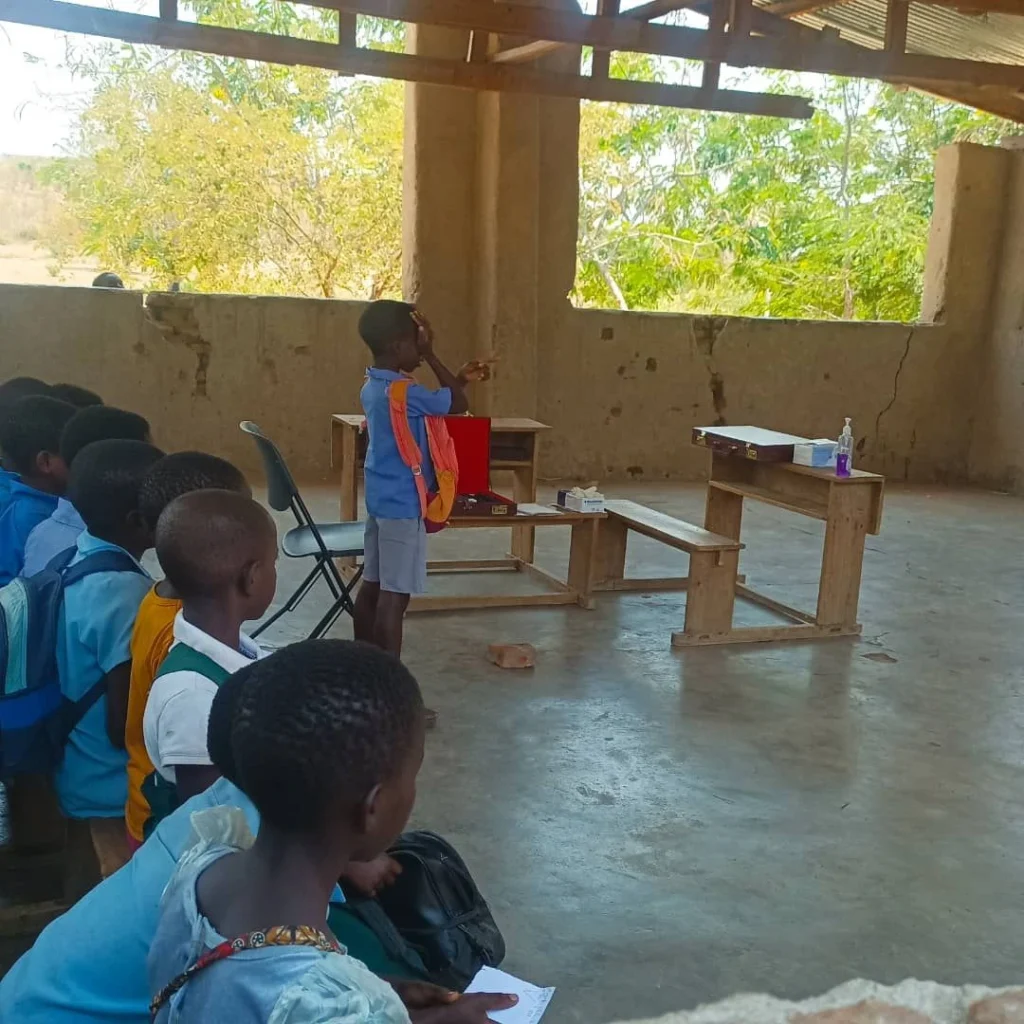
We used the lead up to World Sight Day to highlight not only school eye health programs but also programs that reach all children. Through our community health care model, we reach the entire family through door-to-door surveys and eye screenings. Those with sight issues are referred to local vision centres or hospitals for further care. When all cases of avoidable vision loss are addressed, and ongoing eye health care is in place, villages are declared as being avoidable blindness-free. In September on Aahotguri River Island in Majuli District, Assam, India, 20 villages received this declaration. See our work in this region in this video.
Through hospital strengthening and integration of eye health care into primary health care, we worked to support premature infants, who are at high risk of Retinopathy of Prematurity (ROP), a leading cause of blindness in children. When ROP is detected and treated early, it can prevent lifelong blindness. In September, in Bijnor District, India, our partner C. L. Gupta Eye Institute trained 35 neonatal intensive care staff to address ROP.
We also used World Sight Day as an opportunity to advocate for universal health care that incorporates eye health care. To do this, our teams attended 15 meetings with partners, policy makers and local and national governments. Staff also attended press briefings.


Eye health care ambassadors donned #LoveYourEyes glasses and posted eye health awareness messages online. The ambassadors included students at screenings, our President and CEO Kashinath Bhoosnurmath, staff, kids, pets, post-secondary and high school students and even Calgary, Alberta, Canada Mayor Jyoti Gondek. We are grateful for their support in raising awareness of child eye health and Operation Eyesight.
Learn more about how you can support child eye health here.


Operation Eyesight is celebrating a new partnership with three Ottawa Dragon Boat teams. They are competing in the Ottawa Dragon Boat Festival from June 21 to 23. The three teams are promoting the cause of good eye health for all – here in Canada, in India, and elsewhere around the world. Two teams are named Kaavéri Xpress, while a third all-women’s team is called Kaavéri Sherows.
This new partnership reflects the growth of our global community. An organic connection exists between the teams and Operation Eyesight President and CEO, Kashinath Bhoosnurmath (who goes by Kash), as most members are part of the Indian diaspora community in Canada. While members have settled in Canada, built homes, careers and community, a part of their heart lies in India. “Many of us long to support those back in our Indian home,” Kash says. “We know many people are facing very difficult life challenges there that are different than the life challenges we face here in Canada.”
One way to offer support is partnering with Operation Eyesight to work towards eliminating avoidable vision loss. This is not only about sight but also about learning for children and particularly girls, maintaining a livelihood for adults, and securing independence for seniors. Globally, more than 1.1 billion people are living with vision loss, and fortunately, 90 per cent of these cases are treatable or preventable. However, only a limited number of people are aware of this fact. Many, especially in middle- and low-income countries, are forced to live with blindness or some form of vision loss due to lack of access to affordable and quality eye care services. “This is a kind of global emergency,” says Kash. “If this issue is addressed, communities and countries will experience reduced burdens of poverty and disease, as well as increased levels of productivity and development. These factors are interlinked.”
Operation Eyesight has developed a successful model that results in the elimination of avoidable vison loss. Our tested and evidence-based model is the foundation for our projects in 10 countries. “In India alone, we proudly boast over 1,300 villages that have been declared free of avoidable blindness on a sustainable basis. Our story needs to be known and told,” says Kash. An eye exam and a pair of prescription glasses, or a simple cataract surgery is often all that is needed to bring someone's future back into focus. “Tested and often cost-effective solutions are available. What is needed is awareness, collective will, and support among those who can lend a hand.”
The partnership between the boat teams and Operation Eyesight flows not only from shared values and vision, but also from the power of water, which is fundamental to the boat teams and to healthy eyes. While the two Kaavéri Xpress teams and the all-women Kaavéri Sherows Ottawa Dragon Boat teams will be paddling down the Rideau River on race day, two rivers will be in their hearts, as the teams are named after the sacred Kaveri River in southern India. Team captain Lokesh Siddaramanna explains, “Kaaveri connects us back to our roots, as it’s a lifeline for farming and drinking water for much of Southern India.” He adds that the name was chosen because it resonates deeply with people across the region, lifting their spirits and connecting with their hearts.
There are many parallels between the dragon boat teams and the global community of Operation Eyesight. Boat teams must recruit committed members, train collaboratively and work in sync with one another to successfully compete against other teams. The global community of Operation Eyesight must recruit committed partners, train local health care workers and work collaboratively with partners, hospitals, governments and communities to eliminate avoidable vision loss. Everyone must keep their eyes on the finish line. How fast they finish the race really depends on how successfully they can work together.
During the festival, Kash and Myrna Linder, Operation Eyesight Director of Fund Development, will join a pre-race pep talk, cheer on the teams, and attend an evening dinner to connect with the members. They will also present on Operation Eyesight programs in India, South Asia and Africa. As the dragon boat teams race down the river, their support will speed Operation Eyesight along in the race to eliminate avoidable vision loss.
“We are so grateful for the partnership between the Kaavéri Xpress and Kaavéri Sherows Ottawa Dragon Boat teams, and the connection to the Indian diaspora community,” Kash says. “This is really helping us to race not only into the next village of work, but also the next 10, 100 and 1,000 villages, so that one day, hopefully very soon, we can cross the finish line by eliminating avoidable vision loss entirely.”
Support the Kaavéri Xpress and Kaavéri Sherows Ottawa Dragon Boat teams by cheering them on and helping them race towards the finish line – and towards eliminating avoidable vision loss – by donating here.